We Started by Detecting People. We Ended Up Modelling the Work.

Helin runs vision-AI inference at the edge to make the human layer of industrial operations visible. Built on Azure Machine Learning, IoT Hub, Device Registry, and Microsoft Fabric, its first app, RedZone, is live on offshore drilling rigs and available on Azure Marketplace.
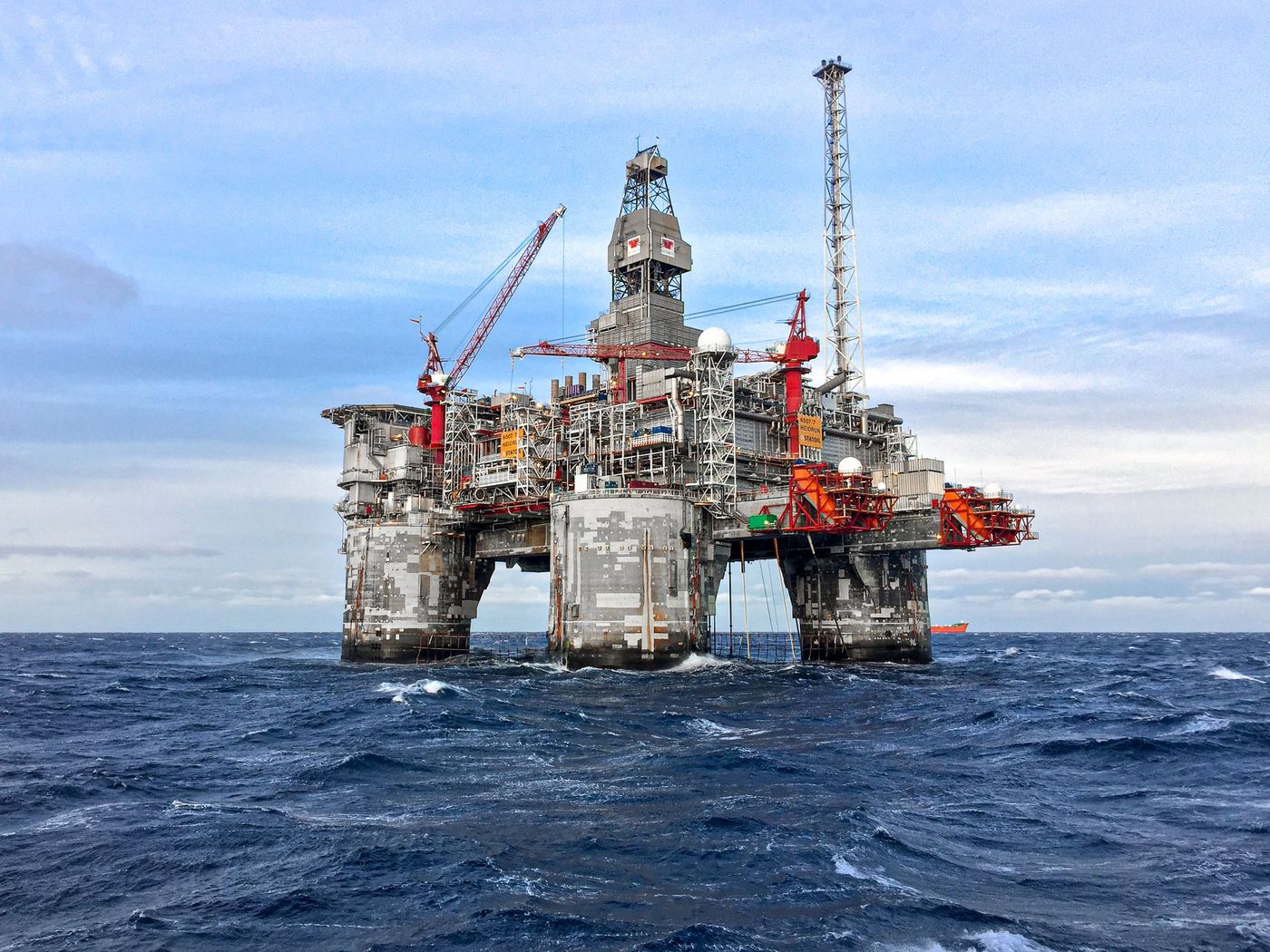
Making the human layer visible.
On the drill floor, the roughnecks work in the middle of moving steel. The top drive hoists and spins pipe overhead; the iron roughneck moves in to make up the connection; stands of pipe swing into place. Every machine around them is reporting its status to the control room: pressures, torque, RPM, position. Not one system is watching the people in between.
Traditional operational data captures what machines do. It has never captured what happens around them: where people are, how they move, when they cross paths with heavy equipment. So when something goes wrong, or simply goes slower than it should, teams reconstruct the human layer after the fact, from machine logs and memory, because nothing recorded it as it happened.
The equipment has been telling its story for decades. The human layer has stayed silent. That's the gap Helin set out to close, on Azure.
TL;DR
- Helin runs vision-AI inference at the edge, on Azure, to make the human layer of industrial operations visible to safety and operations teams.
- Built on Azure Machine Learning, Azure IoT Hub, Azure Device Registry, and Microsoft Fabric.
- First application: RedZone, hazardous-zone monitoring live on offshore drilling rigs, alerting in roughly 50 milliseconds with no cloud round-trip.
- Helin is co-sell ready and available on Azure Marketplace.
Helin didn't build a safety product. We built the platform it runs on.
Underneath every Helin deployment is a single loop: train a model in the cloud, deploy it to the edge, deliver inference where the work happens. Models are trained and versioned in Azure Machine Learning, then pushed to a fleet of Helin edge boxes managed through Azure IoT Hub and Azure Device Registry: the device plane Microsoft is building next, and one Helin has been running against since its public preview. New data from the edge flows back to sharpen the next model. The loop closes.
The loop, in short
- Train & version models: Azure Machine Learning
- Deploy & govern the fleet: Azure IoT Hub + Azure Device Registry (public preview)
- Infer on-site: Helin edge box, no cloud round-trip
- Stream the signal, not the video: Microsoft Fabric Eventhouse
- Model the operation: Microsoft Fabric
The inference runs on the box, on-site. Nothing depends on the cloud at runtime: the box keeps watching and acting through network outages, and raw video never leaves the platform. Only events and metadata sync to Azure. For an offshore rig on a constrained VSAT link, that isn't a convenience; it's the only way the system can work. Standalone, in full private control, by design.
And the Helin Data Collector connects into the industrial control systems already on-site, so a detection is never just “a person, here.” It's a person, here, during this operation, with this equipment active.
“The availability of a built-in certificate manager is a great upgrade in keeping the IoT space more secure.”
Martijn Handels, CTO, Helin, one of the first partners live on Azure IoT Hub's device registry preview
None of this is specific to safety. The same loop that learns to see people can learn to see anything a camera and a control system can describe.
The first app we built on it: RedZone
RedZone is a hazardous-zone monitoring application. On the drill floor, it detects when a person enters a danger zone around active heavy equipment and alerts in roughly 50 milliseconds, with no round-trip to the cloud. It needs no wearables or tags, and it logs timestamped evidence for audits automatically.
It's a demanding place to prove a platform: offshore, safety-critical, moving steel, connectivity you can't rely on. If the pattern holds here, it holds almost anywhere. Noble implemented Helin’s Remote CCTV Manager to provide a live video stream of 20+ rigs to authorized personnel at Noble’s office locations. Optimized video streams are stored in the secure Azure cloud tenant and full-resolution recordings are stored temporarily at the drilling rig to minimize the bandwidth required and data transmission costs. Read the full case study here.
But the point isn't RedZone. The point is that RedZone is just one app. A different customer, with a different hazard, a different zone, a different rule about who can be where and when, could build their own the same way: on the same platform, the same loop, the same Azure foundation.
From an alert to a model of the operation
The alert was the beginning, not the product. Once the platform is continuously detecting people and equipment, it isn't collecting alerts anymore. It's collecting a continuous record of the human layer, the one no system had before.
What turns that record into meaning is an ontology: a layer that relates equipment to operations to people. A detection stops being “a person at these coordinates” and becomes “this person, in this role, during this phase of the job, near this machine.” The data now describes work, not pixels.
That changed what we could explain. In periods where traditional analytics were blind, having process output but never situational awareness, the movement record was the only thing that could account for what actually happened. Post-job analysis became possible: reconstruct a finished job hour by hour, and see where people and equipment really spent their time. Chart it as a heatmap, and patterns surface that no machine log would ever show: recurring bottlenecks, wasted movement, hazards no one had named.
This is where Azure carries the weight. Movement and telemetry stream into Microsoft Fabric's Eventhouse in real time; Fabric turns that time-series into the operational model: the analysis, the reporting, the insight. And it runs on cameras already installed for safety. The same sensors that keep people out of danger now show how the whole operation moves. Detection was reactive. The model is proactive.
What will you build?
The real deliverable was never a safety app or an efficiency report. It's a real-world model of your operation, and any asset-intensive operator can build their own on this platform. A different hazard, a different bottleneck, a different question about how people and equipment move around each other: the pattern is the same, and the answer is yours to build.
See RedZone in action:
It works because it's Azure-native end to end, from the edge box to the dashboard. Every deployment builds on Azure Machine Learning, Azure IoT Hub and Azure Device Registry, and Microsoft Fabric, and grows with the customer's fleet. It's an instance of the pattern Microsoft already champions: process at the edge, stream the signal that matters to the cloud. Helin is built on Azure, co-sell ready, and available on Azure Marketplace.
For Microsoft account teams, that's a concrete answer for any customer asking about edge AI, worker safety, or operational efficiency, reach the Helin team here. For operators ready to start, visit the Azure Marketplace listing.
On the drill floor, the machines have been telling their story for decades. Now the human layer has a voice too.
Want to read more?
Stay up to date with the latest trends and developments on the topic of industrial edge computing, monitoring and intelligence.




Stay up to date
Subscribe to our newsletter for the latest industry insights, product updates, and real-world applications of Helin’s technology.