

AI inference at the edge. Control at the asset.
Helin puts AI models where they need to run: on your equipment, offline-capable, connected directly to the control layer. Thousands of assets. One architecture.
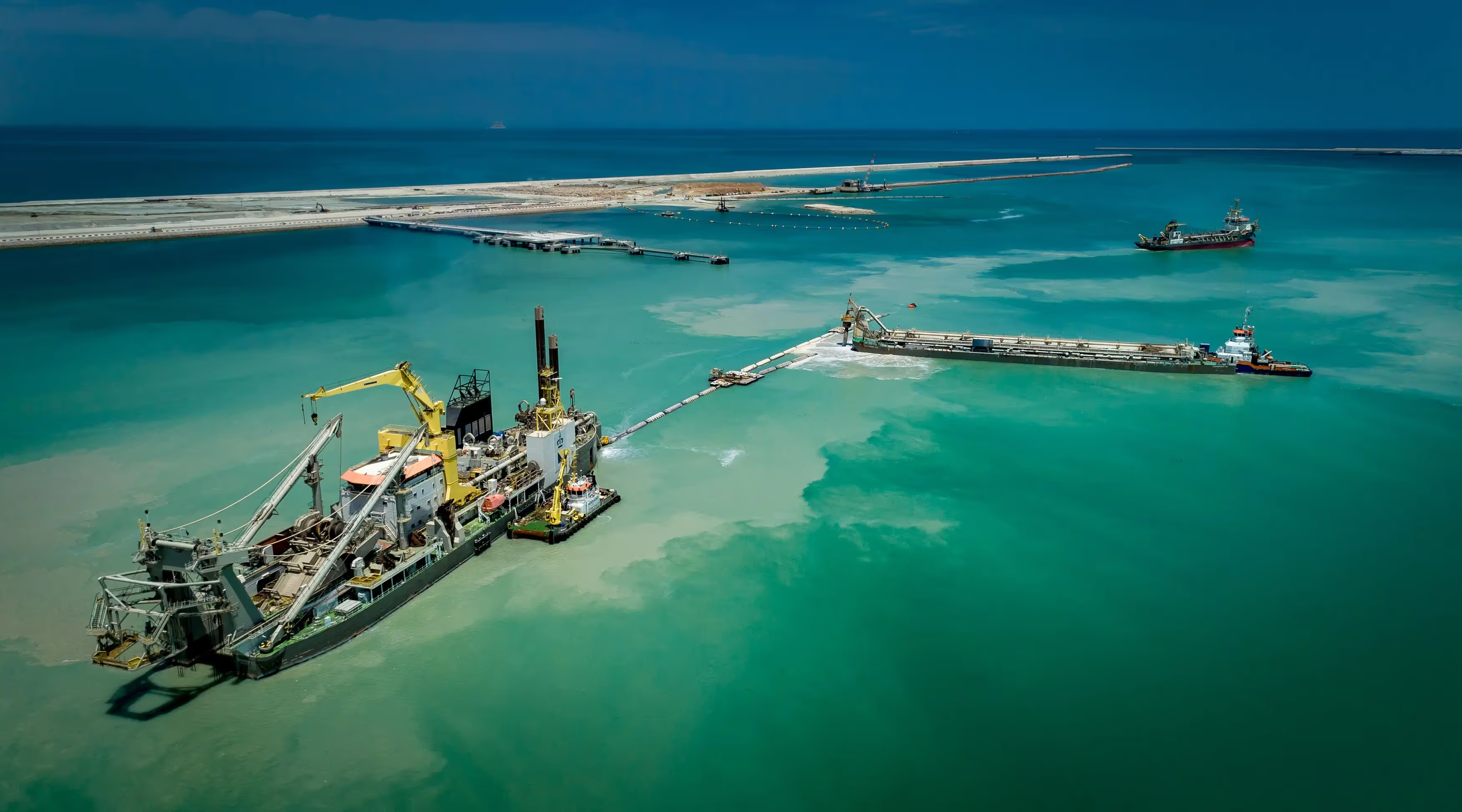
Talk to an expert- Boskalis100+ vessels, live in under two weeks
- Sunrock150 solar sites steered against live market prices
- BPcamera to control action in under 150ms
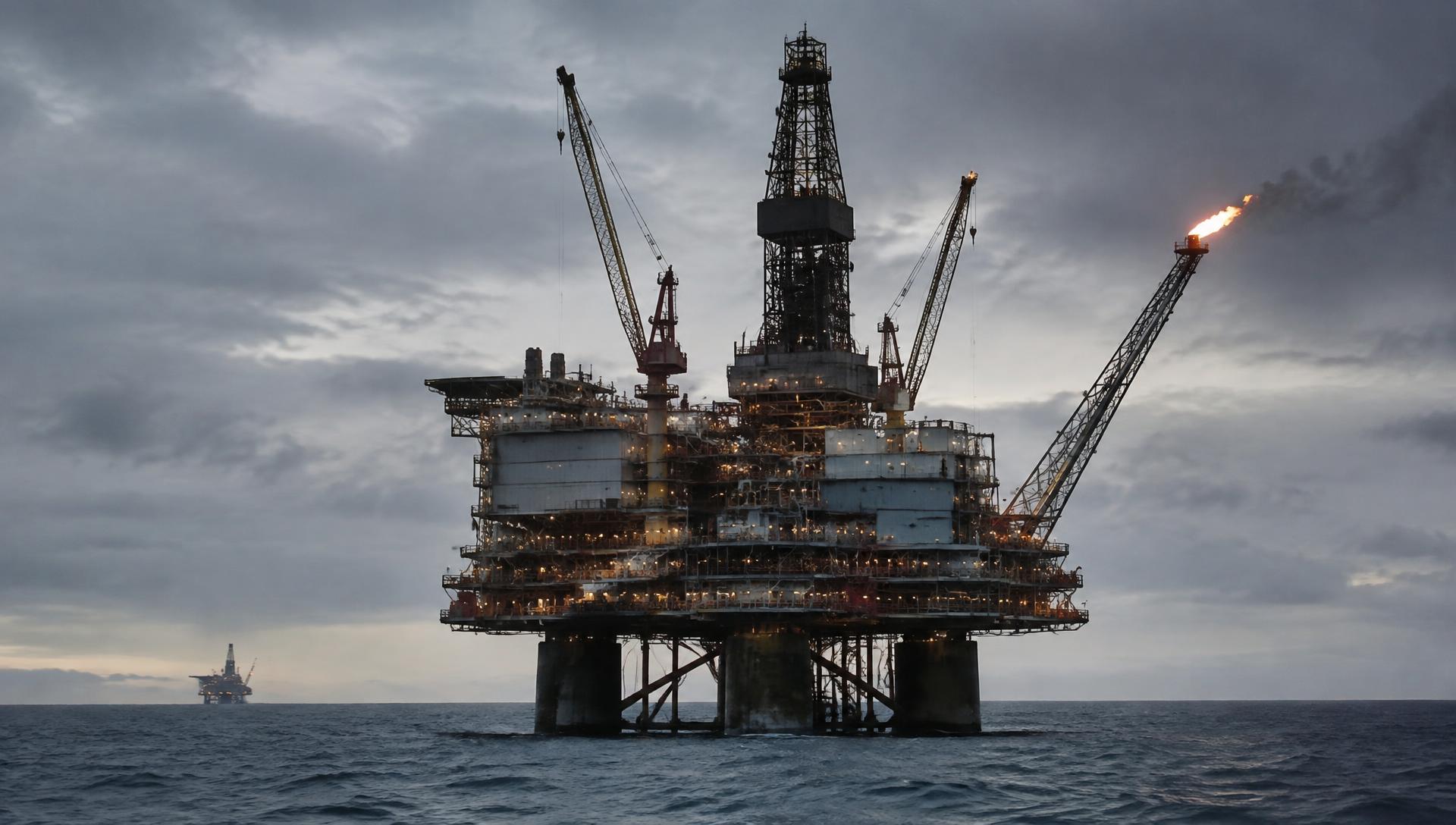
- Noble20+ rigs on one fleet-wide deployment
At a glance
- Helin is the secure edge application engine for industrial operations.
- One architecture runs device management, security, edge runtime, data pipelines, and control logic across offshore rigs, solar farms, and maritime fleets.
- Control decisions execute at the asset in under 150ms. No cloud dependency on the control loop.
- Zero-trust security and certificate-based device identity are built into the runtime, not deployed as a separate tool, not configured site by site.
- One vendor owns what sits underneath. Integration risk stays off your desk.
Five vendors. No owner.You pay when something breaks.
- 01
The stack is fragmented.
Offshore downtime costs $220K–$770K per day. Most operators spread that risk across five vendors with no single owner when something breaks.
- 02
The control loop is broken.
86% of industrial assets cannot route AI to their control systems. The data exists. The control loop stays broken.
- 03
The regulator is watching.
NIS2 and the EU Cyber Resilience Act require zero-trust OT architecture by design. Most operators cannot demonstrate that from a single platform.
Is Helin built for your environment?
01Do you operate assets across multiple distributed sites or vessels?
02Does operational failure, downtime, a missed trading window, a safety incident, carry material financial, safety, or regulatory consequences?
03Do you rely on cloud connectivity for real-time operational decisions at the asset?
04Are you subject to NIS2, the EU Cyber Resilience Act, or sector-specific OT security requirements?
05Have you already invested in a digital or edge initiative that didn't scale beyond a pilot?
Your result
Answer all 5 questions and your fit appears here — 5 to go.
Operators like you have already solved this.
Select your problem pattern and card to see how.
One architecture. Everything your edge stack was missing.
Edge control, security by design, data to control, and a foundation for your own applications.No integration debt. No split ownership. No five vendors sharing the blame when something breaks.
Edge control
When the control loop depends on cloud connectivity, the loop breaks when the link does. Operators running time-critical decisions across distributed assets cannot afford that dependency. Control logic runs at the asset, under 150ms, regardless of what the network does.
Sunrock — curtailment across 150 solar farms. Control stayed local. No cloud hop on time-critical trades.
Security by design
Most distributed operators cannot answer a simple question on demand: which devices are on the network, who accessed them, and when. Every unenrolled device is an unverifiable node. Every ungoverned access event is an audit gap. Certificate-based device identity and access governance are in the runtime at provisioning — not a project to run before the next inspection.
Boskalis — real-time compliance dashboard across 100+ vessels.
Data to control
Operational data reaches a dashboard. A person reads the dashboard. A person decides. A person acts. That sequence has a human relay in it, and the human relay is where latency, error, and missed windows live. AI models deploy locally and execute as control actions at the asset. The loop closes without the relay.
BP — camera to vision AI to physical control action in under 150ms. Human lives saved.
Your expertise, running at the edge
Operators who have built domain expertise and application logic should not have to solve device management, security, deployment pipelines, and protocol adapters before their application reaches the asset. That infrastructure is already there. Bring the application. Helin handles everything underneath it.
Four operators. Results that speak for themselves.
BP. Sunrock. Boskalis. Noble. Four of the most demanding operational environments in the world. One platform running underneath all of them.
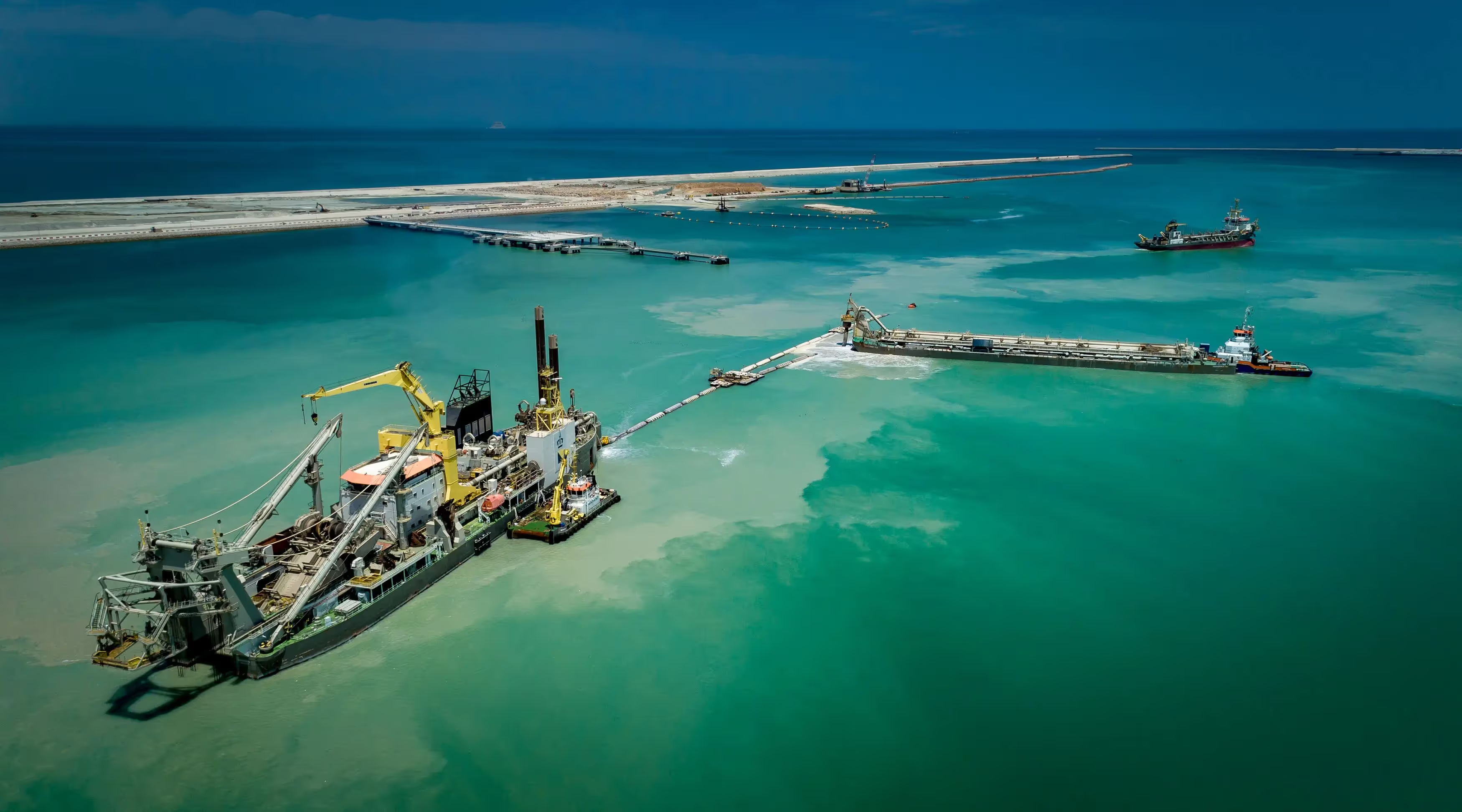
Boskalis — Maritime
Two weeks to fleet-wide compliance.
- To fleet-wide dashboard
- 2 wksTo fleet-wide dashboard
- Vessels live
- 100+Vessels live
- Fleet fuel use down
- 8%Fleet fuel use down
Boskalis operates more than 500 vessels and floating units. Data came off dozens of different OEM systems on every hull, and building custom middleware in-house was judged too costly to maintain. A real-time compliance dashboard went live across 100+ vessels in under two weeks, ahead of a NIS2 audit. It was a factor in a €50 million tender win. Fuel use across the fleet is down 8% since.
Read the Boskalis case study →Frequently asked questions
One architecture.One owner.One conversation to start.
Talk to an expert to see how Helin fits your operational environment. No sales deck. No demo environment. A 30-minute conversation with someone who knows what your stack looks like and where the integration debt sits.